*Overseas model shown
Experience the future of e-mobility with the wide range of models from BMW. Electric cars from compact small cars to elegant Sedans, spacious Tourings and fully electric SUVs – our fully electric ranges get you to your destination on everyday trips and longer journeys.
The wide range of BMW electric car models.
SUV (4)
Touring / Sedan / Coupé (5)
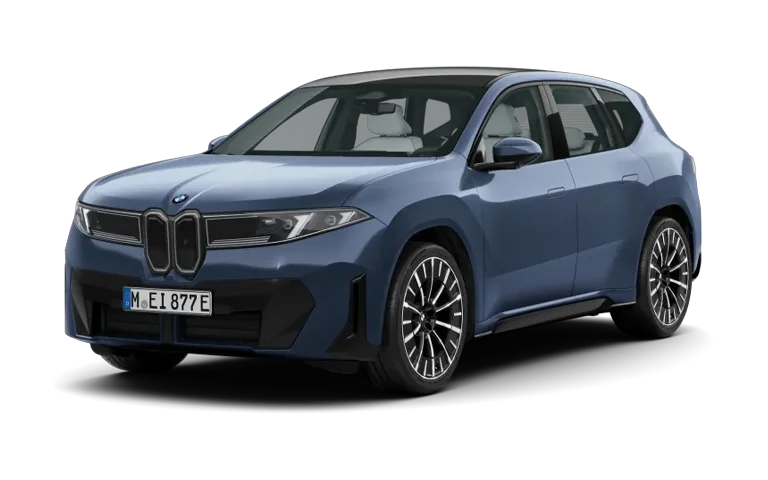
BMW iX3 50 xDrive
Electric Range2
805 km
DC min. charging time (10-80% state of charge)3
0:21 h
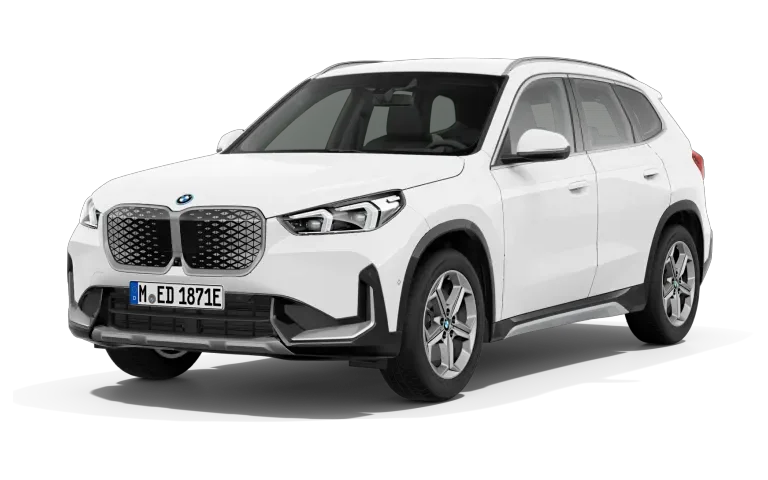
iX1 eDrive20
Electric Range2
Up to 464 km
DC min. charging time (10-80% state of charge)3
0:29 h
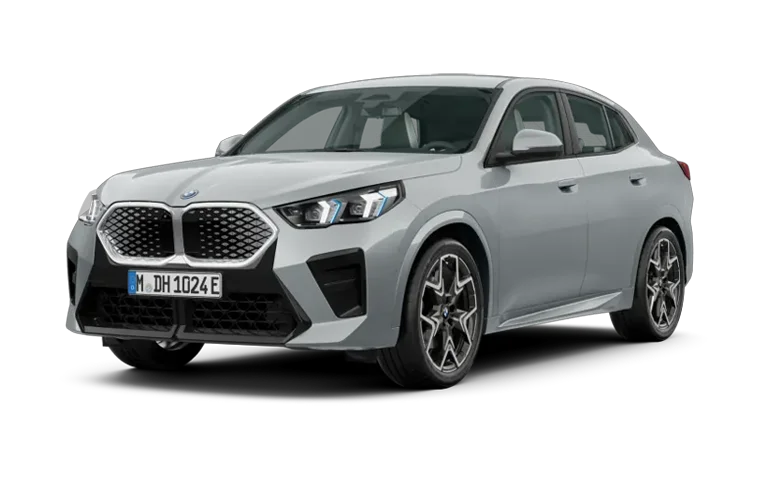
iX2 xDrive30
Electric Range2
Up to 395 km
DC min. charging time (10-80% state of charge)3
0:29 h
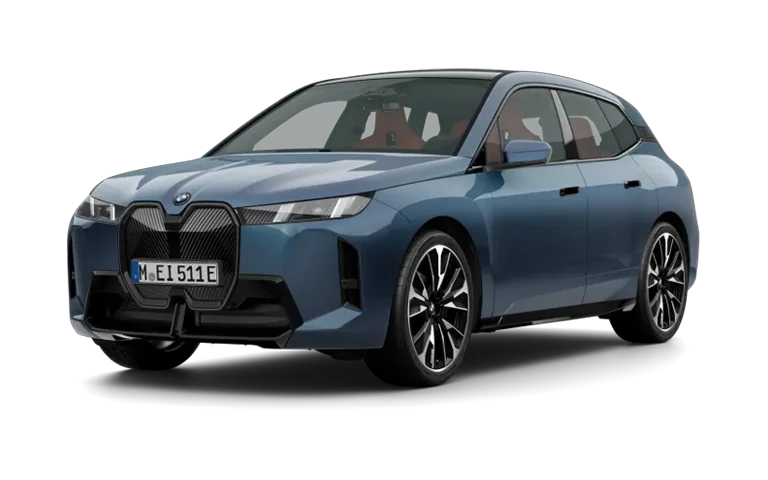
BMW iX xDrive45
Electric Range2
Up to 616 km
DC min. charging time (10-80% state of charge)3
0:34 h
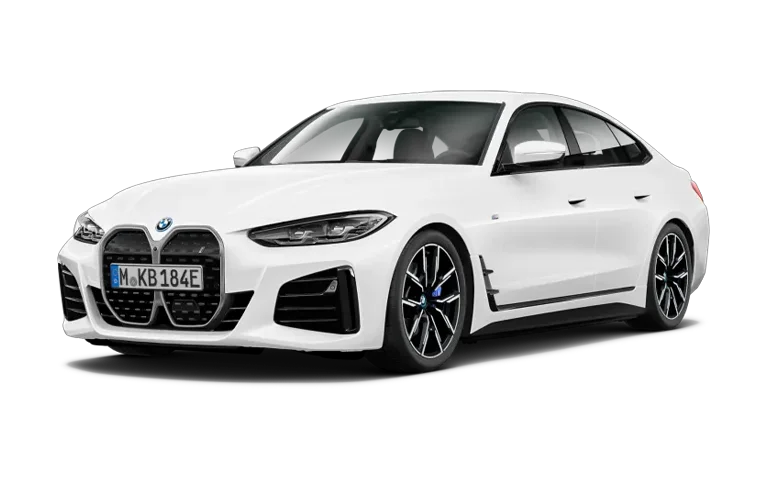
i4 eDrive40 Gran Coupé
Electric Range2
Up to 520 km
DC min. charging time (10-80% state of charge)3
0:30 h

i4 M50 Gran Coupé
Electric Range2
Up to 465 km
DC min. charging time (10-80% state of charge)3
0:30 h
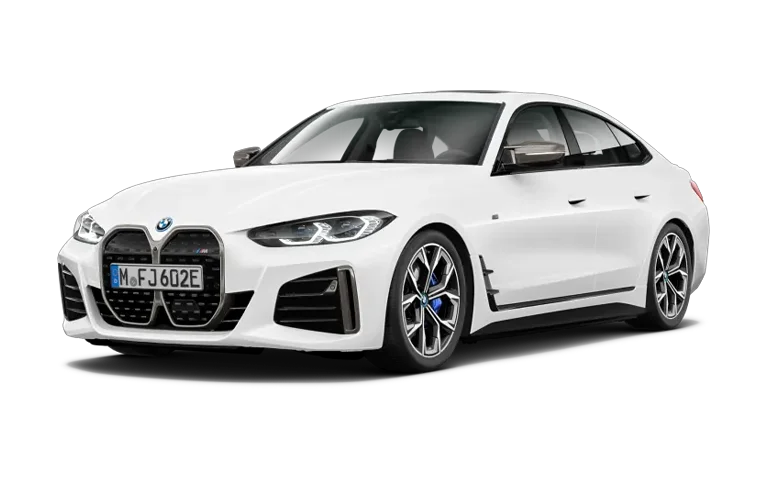
i5 M60 xDrive Touring
Electric Range2
Up to 503 km
DC min. charging time (10-80% state of charge)3
0:30 h
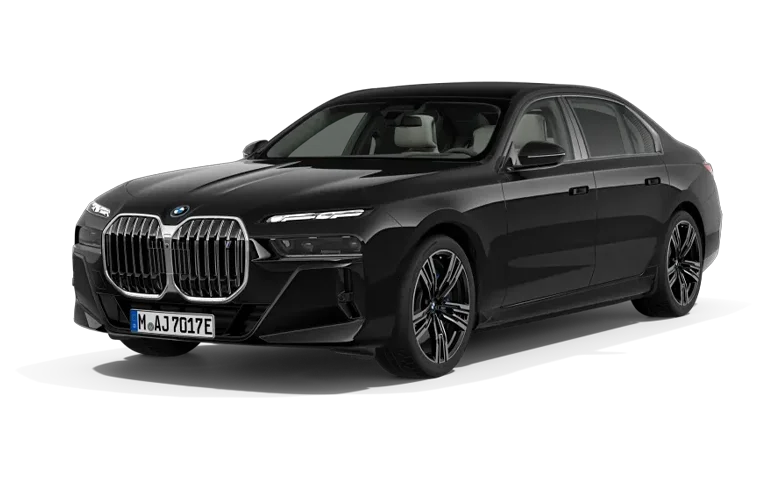
BMW i7 xDrive60 Sedan
Electric Range2
Up to 625 km
DC min. charging time (10-80% state of charge)3
0:34 h
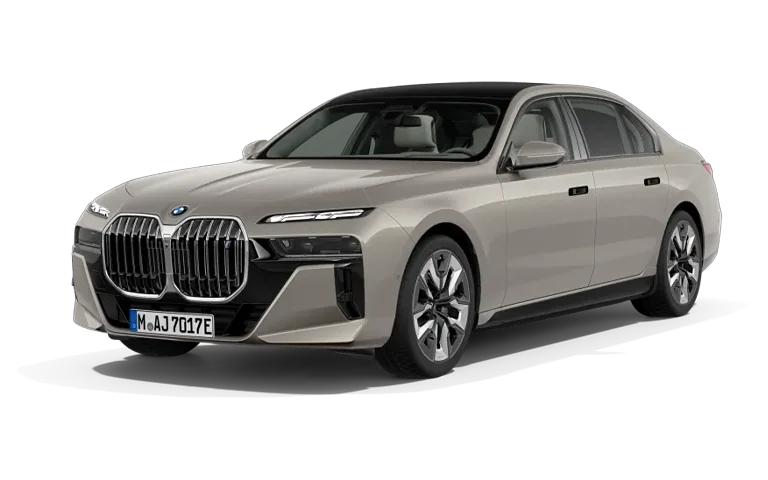
BMW i7 M70 xDrive Sedan
Electric Range2
Up to 576 km
DC min. charging time (10-80% state of charge)3
0:34 h
Find your BMW electric car.

Your new BMW electric car.
Explore the range of available BMW fully electric and plug-in hybrid vehicles near you.
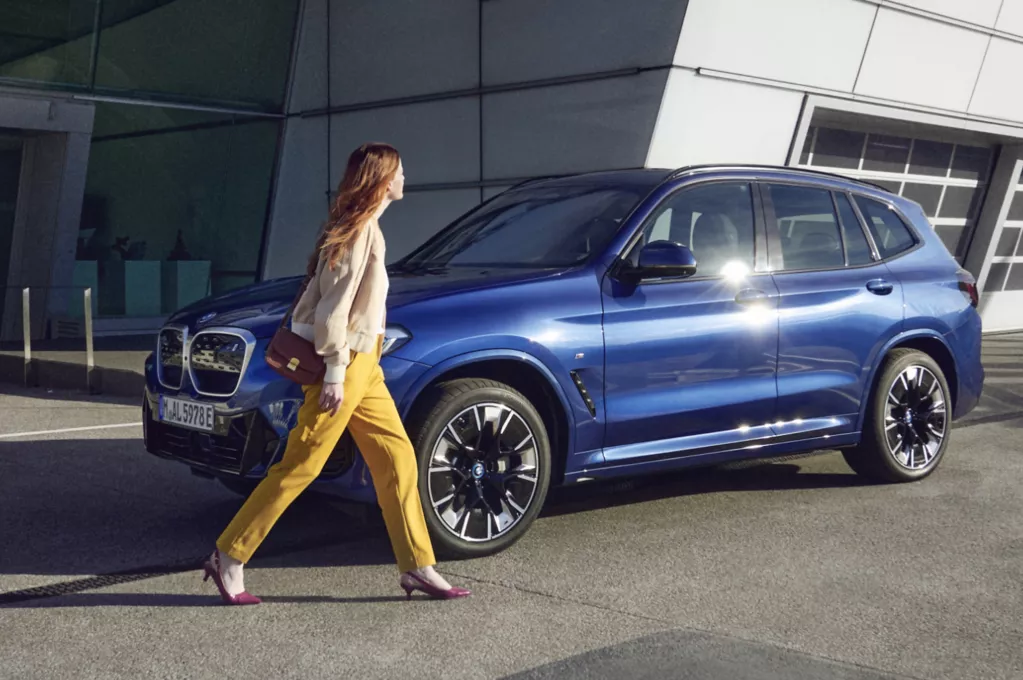
Certified pre-owned electric vehicles.
Are you interested in finding a used electric car from BMW in premium quality? Find out more about our used electric cars here.
The benefits of BMW electric cars.

Locally emission-free.
Now you can drive locally emission-free and almost silently on shorter trips or around town. This means that you can reduce your CO2 emissions and noise levels in town, and at the same time set an example of environmentally-conscious mobility.

Charging made easy.
Use your own wallbox to charge your electric car conveniently from the comfort of your own home. Charge it overnight to start the day with a charged battery. The benefits of having your own charging station: you save time and your electric car charges reliably at home.

Low running costs.
Reduce CO2 and save costs. Ongoing maintenance costs of an electric vehicle can be lower over its lifetime compared to an internal combustion engine vehicle. It has no components that are susceptible to wear, like spark plugs or oil filters, reducing maintenance costs.
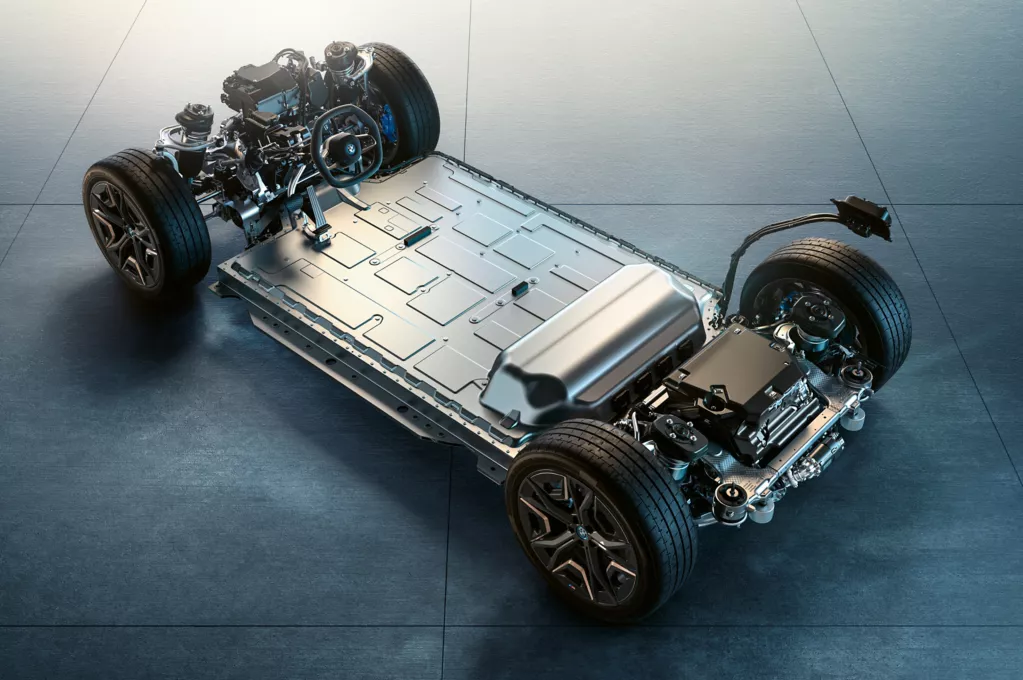
How to positively impact the service life of your electric car battery.
Find out how the battery and electric motor of an electric car work. How you can positively influence the life of the high-voltage battery. And how quietly and powerfully an electric car accelerates and cleverly recovers energy when you brake.
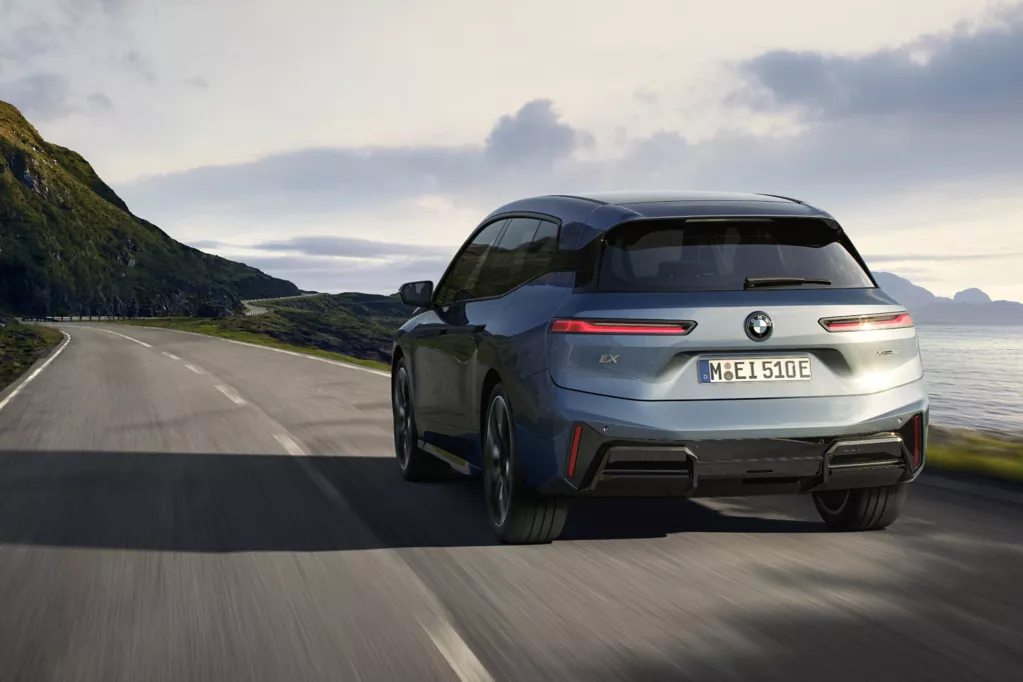
Electric cars range.
Plan you next road trip in your fully electric BMW with ease. The charge-optimised route planner in the vehicle automatically finds the best and fastest charging options along the route according to your needs. At the same time, an anticipatory and even driving style further increases the range of your electric car. You can conveniently check your vehicle's available driving range from the comfort of your home in the My BMW app.

Your charging stations for at home and on the go.
Find out more about modern charging technologies in a convenient charging infrastructure and the different types of charging with BMW Charging. Whether you need a fast charge on a long journey, near a café, or conveniently at your home using a wallbox. Find the right charging option for your electric car, to suit your lifestyle.

The costs of electric cars.
What does it cost to charge an electric car? Save money with lower service costs and lower taxes. Are there incentives for electric cars? Find out whether an electric car makes financial sense for you.
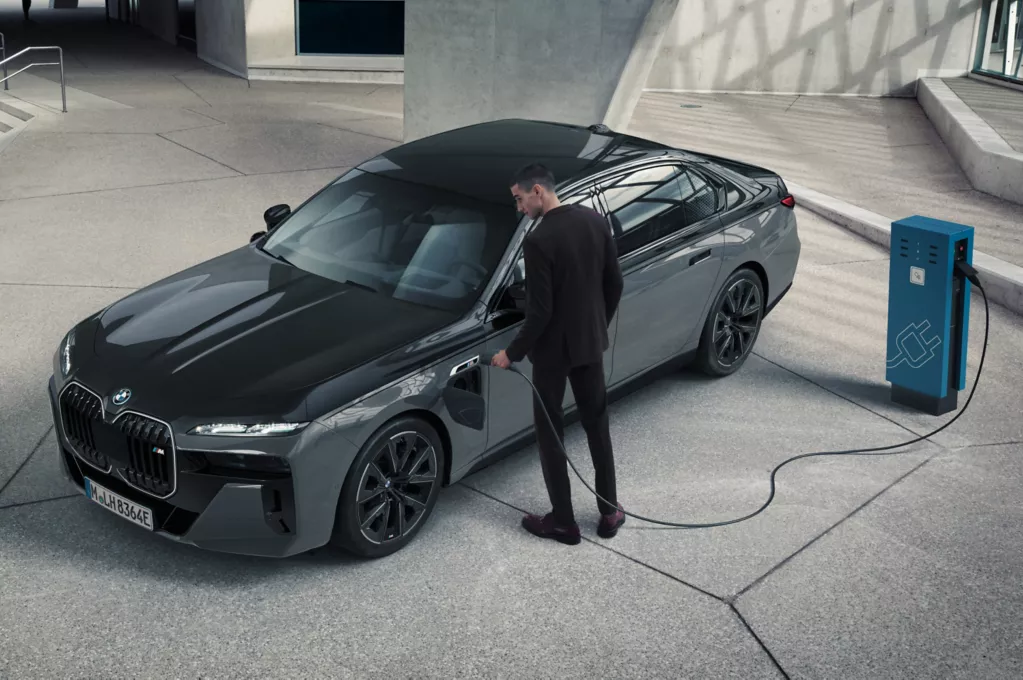
Plug-in hybrids: flexible driving.
BMW plug-in hybrid models combine the best of both worlds. You can now drive locally emission-free with an electric drive on shorter trips or around town. And, as usual, a petrol engine supports you on longer journeys.
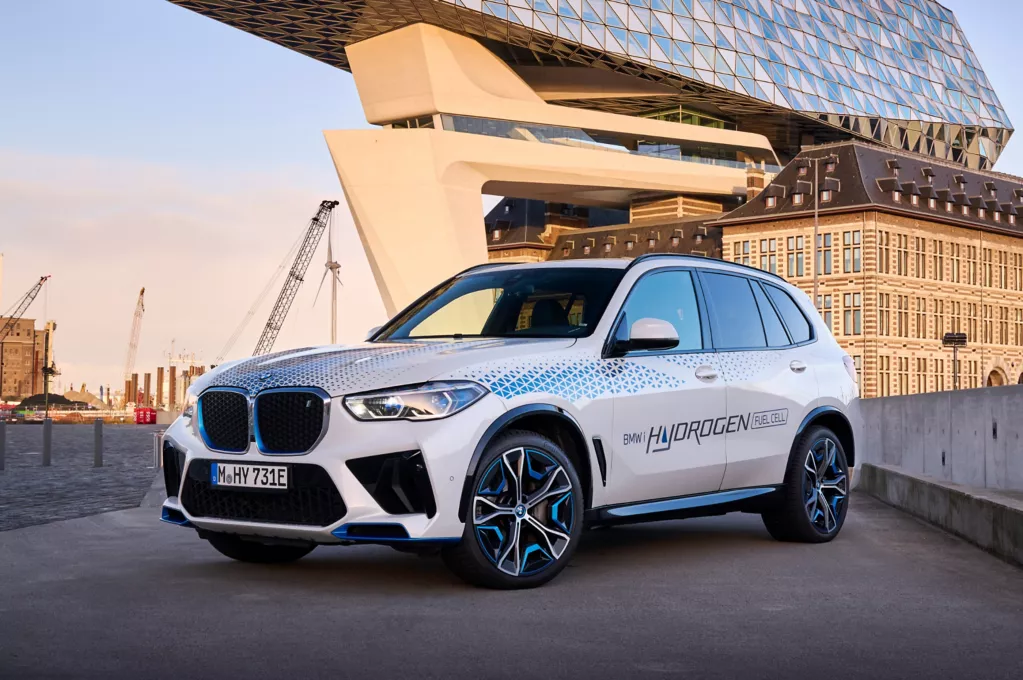
Hydrogen as the fuel of the future.
With the BMW iX5 Hydrogen concept car, BMW is presenting an innovative hydrogen vehicle. The BMW iX5 Hydrogen only needs 3-4 minutes to refuel for a range of up to 504 km. This means you can use it as you would a car with a regular combustion engine, while offering you all the advantages of electric mobility.
Frequently asked questions.
What is BMW Financial Services?
BMW Financial Services provides a variety of services for both private and business customers. We offer vehicle leasing, financing and insurance options. Explore our website to learn more.
What services does BMW Financial Services offer?
BMW Financial Services caters to private and business customers, offering vehicle leasing, finance and insurance. We offer a flexible application process with options to apply for finance online, via My BMW Finance, or face to face within our dealership.
What is an electric car?
A BEV (battery electric vehicle) drives exclusively on electricity, driven by an electric motor. It therefore doesn't have a combustion engine to drive the vehicle. The electrical energy is stored in a high-voltage battery. Alongside other factors1 it is mainly its capacity that determines the range of the electric car, in other words, the distance that it can cover with one battery charge. An electric car is considerably more efficient than vehicles with combustion engines, among other things because the drive motor feeds the brake energy back to the battery, a process called recuperation. In addition, electric cars drive locally emission-free. This is a significant difference from combustion engines.
Fully electric cars are ideal for users who can charge their electric car battery at work or at home. At the same time, the public charging infrastructure is expanding at a rapid pace. New charging stations are therefore appearing all the time in urban areas and along motorways. There are also a number of high-power charging stations for ultra-fast charging on longer journeys, such as the charging stations operated by our partner IONITY in Europe. Long journeys are set to become ever simpler. Long journeys are set to become ever simpler.
1 Other factors affecting the range include the aerodynamics of the vehicle, the travel speed (e. g. motorway/urban driving), driving style, outside temperature, etc.
How do electric cars work?
The battery in an electric car stores energy. An electric motor converts this energy into movement. Without the diversions involved with a conventional manual transmission, the power is directed straight to the wheels. You simply press the accelerator pedal, and you can feel the full acceleration power instantly. Unlike with a combustion engine vehicle, an electric car has access to the full driving power, even at low speeds, which can be felt in the surprisingly powerful acceleration from standstill.
What advantages does an electric car have?
An electric car provides a completely new and emotional driving experience. You will experience amazing electric dynamics, thanks to maximum torque from a standing start with seamless acceleration. At the same time, the almost silent electric motor delivers a new and relaxed driving experience.
A battery electric vehicle is also locally emission-free. It's also almost silent and therefore does its best to protect our environment.
Further benefits of battery electric vehicles may include Government subsidies and tax concessions.
What factors affect the performance of the high-voltage battery in my electric car?
Temperature is a key external factor that affects a battery's performance and capacity. This is no doubt a factor you may have experienced with your mobile phone: its capacity is also limited at very low temperatures. It's the same with your vehicle. The influence of temperature is minimised by optimised operating strategies, however.
And did you know that the battery capacity also indicates your possible available range? Apart from the temperature, the range is largely affected by your personal driving style, and also by energy consumption factors, such as the air conditioning, trailer load, luggage etc. By far the most important factor in terms of driving style is your chosen motorway speed.
If you need to charge on the go, your fully electric BMW will be preconditioned when you enter a DC charging station as your destination. This means that the high-voltage battery will be adjusted to the optimum operating temperature when you reach your destination, which will increase its charging capability and shorten the charging time.
What do I have to consider if my electric car is left standing still or parked for a longer period of time?
If you need to park your vehicle for a long time, say when away on holiday, there are different factors than can have a positive effect on the battery: maintain a charge of between 30 and 50% and park your car in a cool place or in the shade in summer, and in a garage in winter. Do not leave your vehicle plugged in to charge for longer stationary periods.
How environmentally friendly are electric cars?
Electric cars are considered environmentally friendly by the public because, unlike combustion engine cars, they do not produce exhaust emissions locally. However, looking at the entire life-cycle of an electric cars paints a different picture: CO2 emissions and pollutants are generated in the in the raw material supply chains and during production of the vehicles. The type of electricity used also needs to be taken into account. Due to the energy-intensive production of the high-voltage battery, a finished electric vehicle has a higher carbon footprint than a comparable combustion engine model. This balance only shifts in favour of the electric car during its use. You can further improve your vehicle's environmental footprint by charging your electric car at home with green power such as using electricity from your own solar panels. Once you consider the whole life-cycle of an electric car, its global warming potential is lower than that of a comparable combustion vehicle.
You also need to consider the efficiency of your drive system. Here, efficiency means the percentage of the energy supplied that is actually converted into the required form of energy. The electric drive system in the current generation of BMW electric cars has an efficiency of up to 95%.5 However, the efficiency falls to around 75% if the driving cycle prescribed for the EU (WLTP) plus charging losses and battery depletion are also taken into account. So when driving a BMW electric car, around 75% of the energy charged is actually used for forward motion. Under comparable conditions, a petrol engine car has an efficiency of about 20%. Furthermore, electric cars have the advantage that they generate minimal noise, and so are less stressful for people and animals.
5 Drive unit consisting of electric motor, power electronics and transmission, best efficiency value
What charge is optimum for my vehicle?
Your battery is influenced by a number of factors. Charging primarily affects the range, service life and power of the battery. To ensure the maximum service life of your battery, BMW recommends a battery charge state between 10 and 80% in everyday use. You should only charge the battery to 100% for long journeys, and this should be done shortly before you set off. A careful driving style also actively helps to optimise battery life. You should also pay attention to the state of charge when the vehicle is not in use for a longer period of time. Ideally, it should be between 30 and 50%.
Why do electric cars usually only have one-speed transmission?
A BMW electric car accelerates directly, and can access its full power instantly, even across a very broad speed range. This is made possible by the power characteristics of the electric motor. In an electric car, this means that neither a multi-speed transmission nor a clutch are necessary. Your electric car is just as easy to operate as a BMW with an automatic transmission.
More information.

Test drive the BMW model of your choice.
Would you like to experience for yourself how your ideal electric model drives and feels? Simply arrange an online appointment for a test drive when it suits you. Your local BMW partner will contact you with all the information you need.

Would you like a personal consultation?
Please contact your our dealership with any questions or for more information or a quotation. Our professional BMW service personnel will be happy to advise you by phone or in person.

BMW Customer Support.
BMW Customer Support is on hand to help you with all BMW related issues – so that you get answers to all your questions: whether you're an existing BMW driver or are planning to purchase a new BMW.

BMW Online Genius can help.
Still got questions? The BMW Online Genius has all the answers. Find all the answers to the most frequently asked questions. Simply type in your questions or browse by category.
Enquire Now
1 Fuel consumption, CO2 emissions data, electrical consumption and range is based upon Combined Driving Test Cycle in accordance with ADR 81/02 on purpose built test vehicles. Actual figures will depend on many factors including traffic conditions, driving habits, prevailing conditions and your vehicle’s equipment, condition and use. These figures should not be expected to be achieved in real world driving conditions and should only be used for comparing one vehicle with another. Please contact your preferred authorised BMW dealer or BMW Group Australia for information on vehicles that are available for sale, and the various specifications and options of vehicles that are available.
2 The charging performance depends on the state of charge, ambient temperature, individual driving profile and use of auxiliary consumers. The ranges shown are based on the WLTP best case. The charging times apply to ambient temperatures of 23 degrees Celsius after a preceding drive and may differ depending on the usage behaviour.
3 The charging performance depends on vehicle equipment, the state of charge and health of the battery, battery temperature, individual driving profile, use of auxiliary users, ambient temperature, and the charging power provided at the charging station.
4 The added range after 10 minutes of high-power charging was determined according to ISO12906 in the WLTP cycle and requires that the charging infrastructure enables the maximum DC charging power. The added range and charging performance depend on vehicle equipment, battery state of charge and health, ambient and battery temperature, driving profile, auxiliary users, vehicle-specific charging settings, and the charging power provided by the charging station.
5 Drive unit consisting of electric motor, power electronics and transmission, best efficiency value.