When the price matches the performance. Compared to traditional petrol and diesel-powered cars, electric cars have fewer consumable parts and therefore generally less expensive service costs. At the same time, you can charge them with the electricity tariff that is right for you.
The wide range of BMW electric car models.
SUV (4)
Touring / Sedan / Coupé (5)
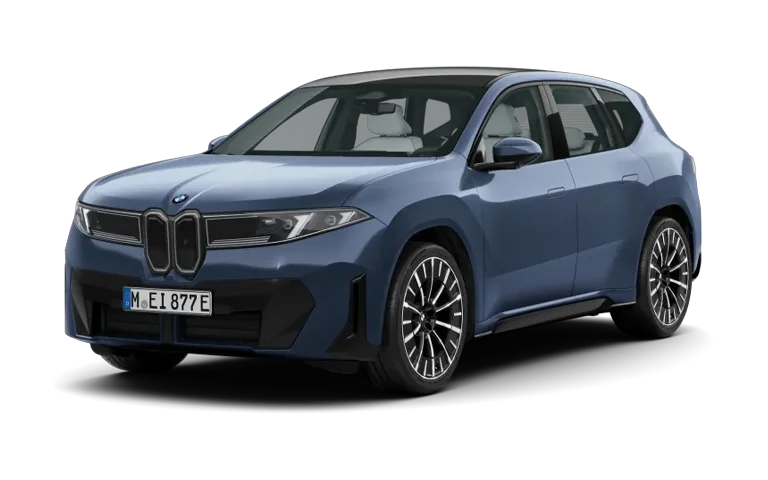
BMW iX3 50 xDrive
Electric Range2
805 km
DC min. charging time (10-80% state of charge)3
0:21 h
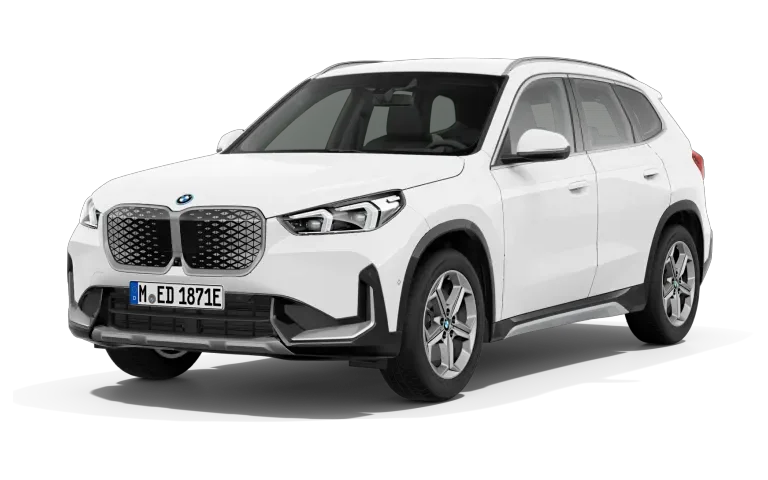
iX1 eDrive20
Electric Range2
Up to 464 km
DC min. charging time (10-80% state of charge)3
0:29 h
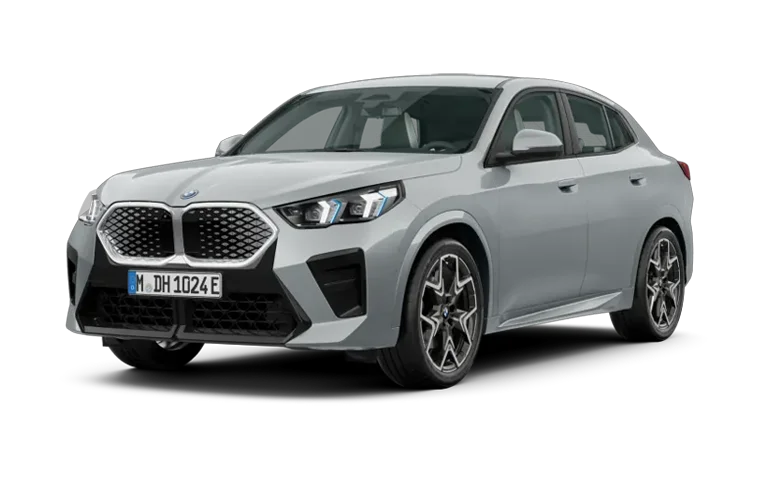
iX2 xDrive30
Electric Range2
Up to 395 km
DC min. charging time (10-80% state of charge)3
0:29 h
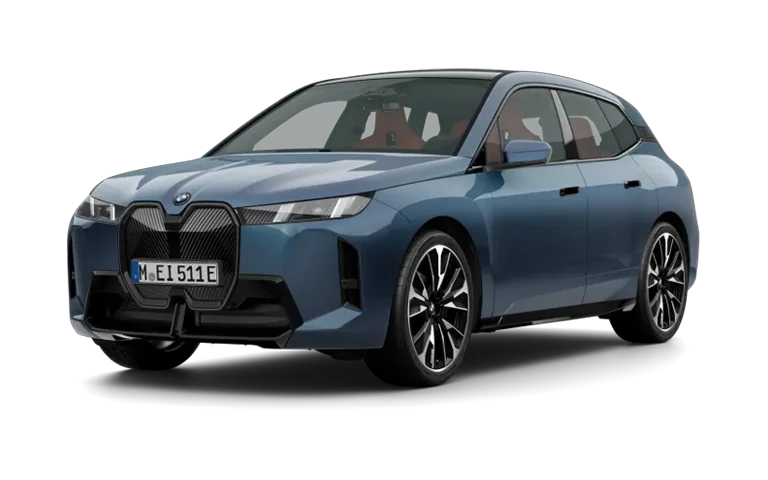
BMW iX xDrive45
Electric Range2
Up to 616 km
DC min. charging time (10-80% state of charge)3
0:34 h
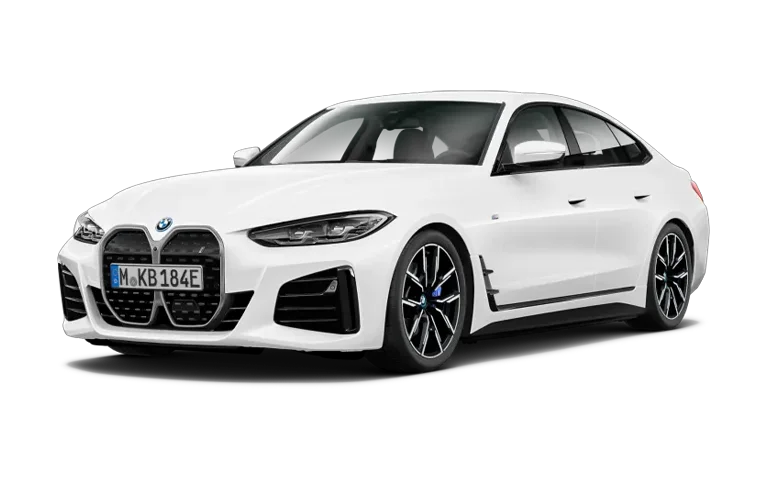
i4 eDrive40 Gran Coupé
Electric Range2
Up to 520 km
DC min. charging time (10-80% state of charge)3
0:30 h

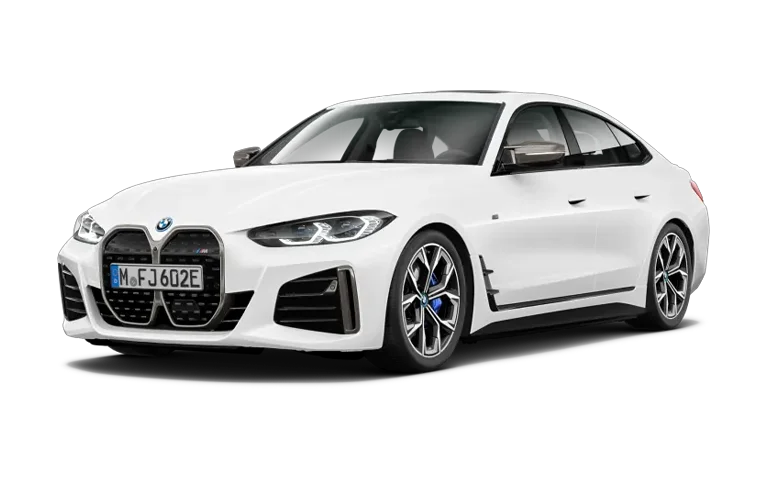
i4 M50 Gran Coupé
Electric Range2
Up to 465 km
DC min. charging time (10-80% state of charge)3
0:30 h
i5 M60 xDrive Touring
Electric Range2
Up to 503 km
DC min. charging time (10-80% state of charge)3
0:30 h
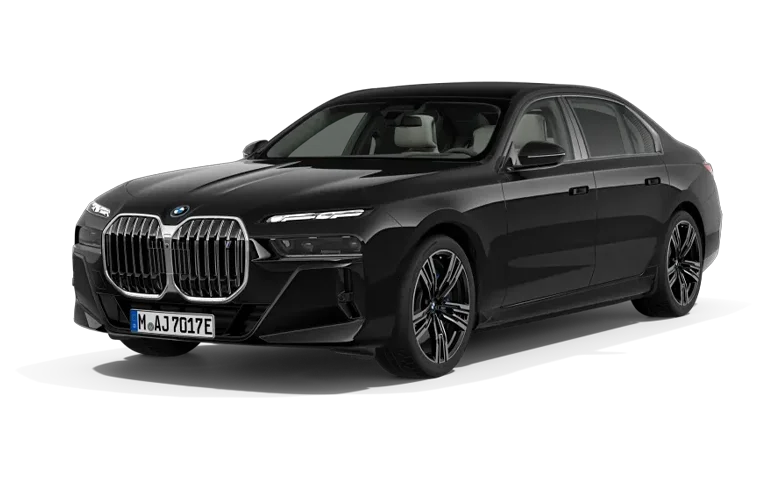
BMW i7 xDrive60 Sedan
Electric Range2
Up to 625 km
DC min. charging time (10-80% state of charge)3
0:34 h
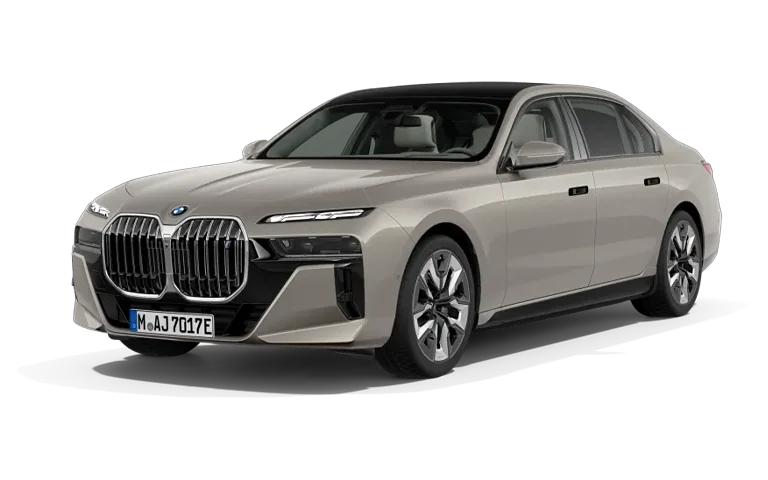
BMW i7 M70 xDrive Sedan
Electric Range2
Up to 576 km
DC min. charging time (10-80% state of charge)3
0:34 h

Electric car leasing. Discover our deals.
Find tailor-made deals and promotions with BMW Financial Services. With attractive leasing deals and terms for electric cars. Private or commercial leasing at affordable rates. Our one-stop shop handles everything at fixed rates. A comprehensive range of financial services plus insurance. Individually tailored to your situation and finances.

Subsidies for the purchase of an electric car.
Many countries offer subsidies, tax benefits, incentives, or credits for electric cars. Find out more about attractive promotions and deals.
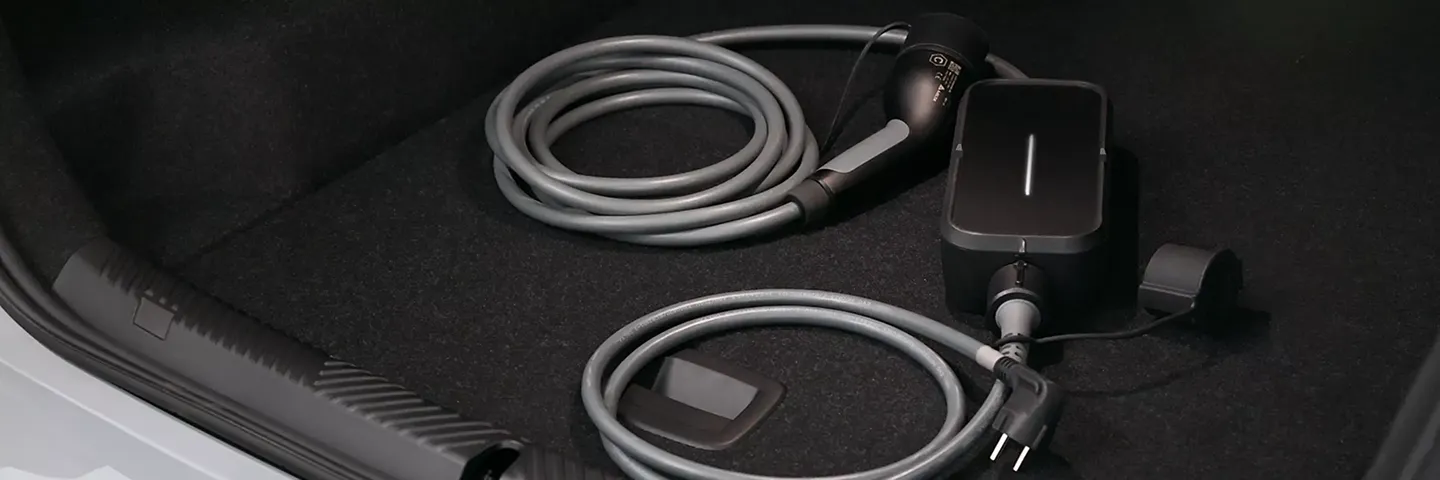
The cost of the Wallbox and charging accessories in the online shop.
In the official BMW Online Shop you will find everything you need to charge your electric car. From the Wallbox to the charging cable and other charging accessories. With detailed descriptions and the specific prices, here you can get all the information you need at a glance.
Electric car maintenance costs.
You'll save on service and maintenance costs with an electric car. Unlike vehicles with a combustion engine, electric cars have fewer wearing parts. There is therefore no need to replace spark plugs and oil filters. At the same time, you'll save on repair costs due to the fact that electric cars have no exhaust pipe. And there's no need to change the oil during an inspection. A service is around 30% cheaper than with a petrol or diesel vehicle, saving you time and money.

Service and maintenance for your electric car.
An electric car also needs to be checked regularly. Your BMW is in the best hands with BMW Service, saving you time and money. With professional support in every situation – whether you need maintenance or repair, or even preventative care with Proactive Care. Always to the most exacting quality standards using genuine BMW parts.
The benefits and impact of electric cars.
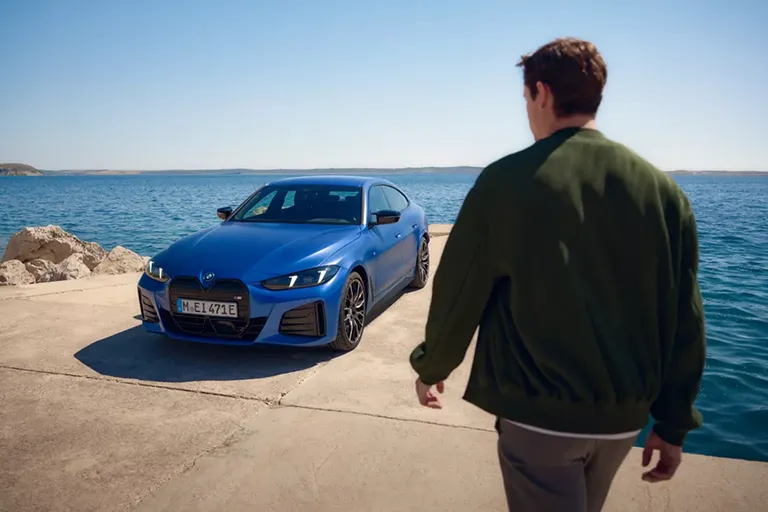
Electric vehicles are now much more than just an investment in the future. They offer a range of benefits that can be helpful in terms of cost planning, day-to-day use and environmental impact. Find out whether or not an electric car will suit your own personal needs.
All about electromobility.
Electric range.
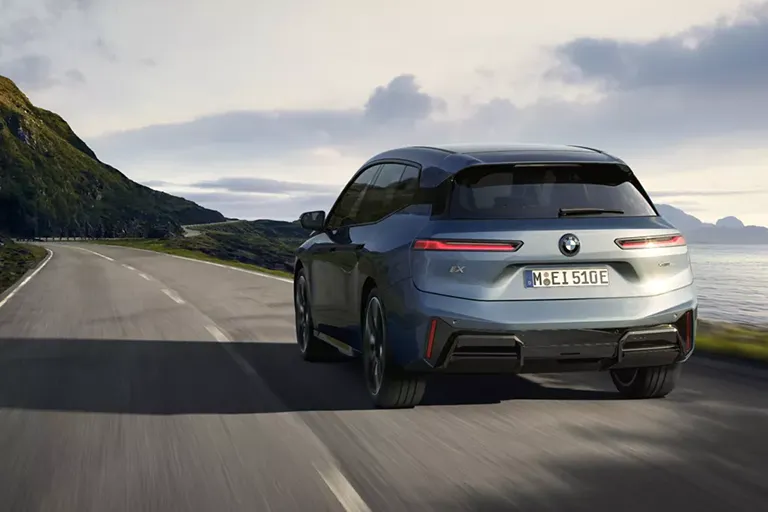
Our electric cars have a range that easily allows you to travel longer distances. The route planner will show you where you can charge your car while on the road.
Charging on the go.
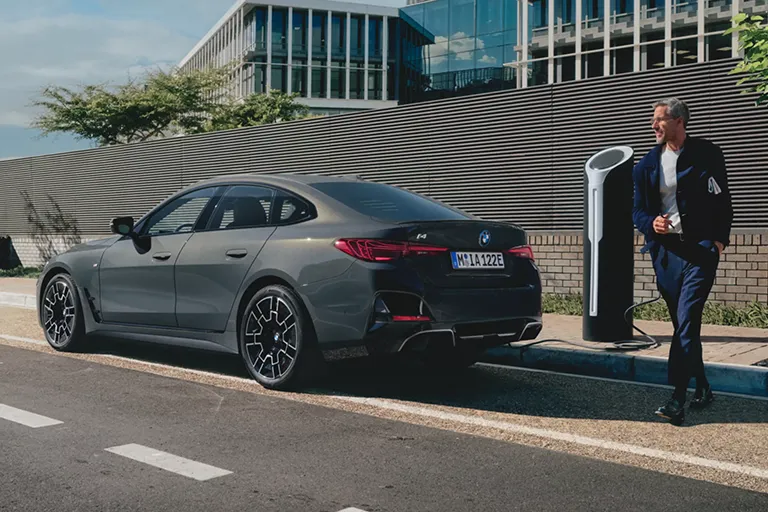
Thanks to our extensive charging solutions, you'll also always find the right charging solution near you for your electric car, even when you’re on the road. Make use of one of our ever-growing charging networks.
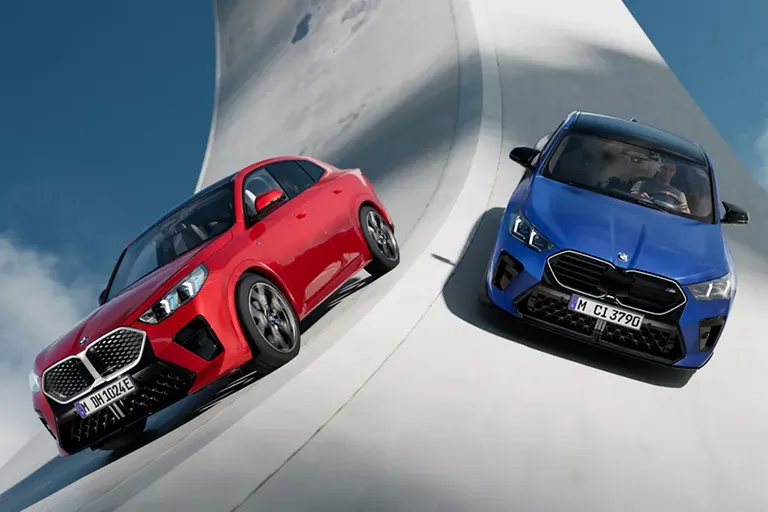
100% electric.
Drive dynamically, comfortably and, at the same time, locally emission-free. Prepare to be impressed by our fully electric cars with state-of-the-art technology and long ranges.
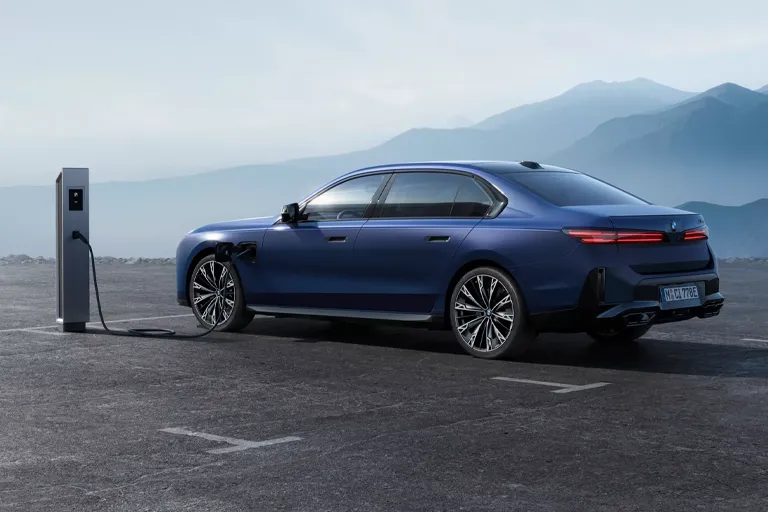
Plug-in hybrids: flexibly on the go.
BMW plug-in hybrid models combine the best of both worlds. You can drive locally emission-free with their electric drive over shorter distances or around town. And, as usual, their petrol engine will support you on longer journeys.
Frequently asked questions.
How much does an electric car cost?
The purchase price of an electric car can vary significantly and depends on various factors, such as the selected model, equipment fitted etc. Generally, electric cars are slightly more expensive than comparable cars with a combustion engine, due to the cost of the battery technology and electric motors. By comparison, their ongoing running costs are more affordable.
There are many benefits to owning an electric car:
Lower running costs: electric cars generally have lower running costs than petrol or diesel vehicles. The energy costs of an electric car are often less expensive per kilometre than filling up with petrol or diesel.
Lower maintenance requirements: electric cars have fewer moving parts in the motor, resulting in lower wear. There is no need to change the engine oil, and the brakes last longer as regenerative braking causes less wear.
Tax benefits: there are also tax benefits and incentives in certain countries and regions to promote the purchase of electric cars. This can reduce the annual vehicle tax payable. In many countries, electric cars are exempt from vehicle tax altogether.
What does it cost to charge an electric car?
The cost of charging an electric car can vary and depends on diverse factors, such as the electricity tariff that you use at public charging stations or whether you charge your car at home with your own solar photovoltaic system. The size of the battery also plays a role, as it determines how much electricity is needed to charge the car, and therefore the cost of a charge.
To calculate the cost of a full charge, simply multiply the size of the battery in your vehicle in kWh by the price per kWh. For example, if you have an electric car with a 100 kW battery and your electricity rate is €0.30 per kWh, then a full charge would cost €30 (100 kWh * €0.30/kWh = €30).
Please note that you are often likely to charge your electric car before the battery is completely empty, meaning that you will undoubtedly pay less than the full price for a charge.
Find your BMW electric car.

Your new BMW electric car.
Find available BMW models and buy or lease your BMW directly online. Fully electric cars or plug-in-hybrids. For example, the BMW iX, the BMW i4 or the BMW i5. There are many offers to choose from.
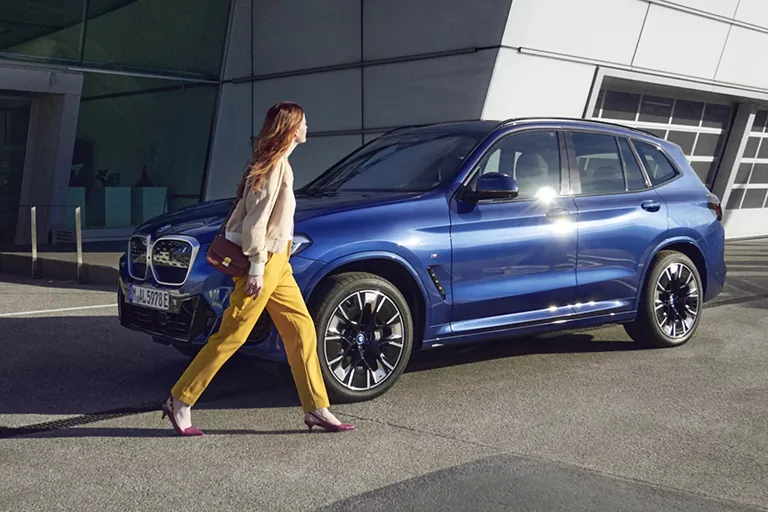
Used BMW electric cars.
Used BMW cars have no reason to hide. The same of course applies to electric cars. Find available used BMW electric cars, for sale or to lease.
More information.

Test drive the BMW model of your choice.
Would you like to experience for yourself how your ideal electric model drives and feels? Simply arrange an online appointment for a test drive when it suits you. Your local BMW partner will contact you with all the information you need.

Would you like a personal consultation?
Please contact your our dealership with any questions or for more information or a quotation. Our professional BMW service personnel will be happy to advise you by phone or in person.

BMW Customer Support.
BMW Customer Support is on hand to help you with all BMW related issues – so that you get answers to all your questions: whether you're an existing BMW driver or are planning to purchase a new BMW.

BMW Online Genius can help.
Still got questions? The BMW Online Genius has all the answers. Find all the answers to the most frequently asked questions. Simply type in your questions or browse by category.
Enquire Now
1 Official data for fuel consumption, CO2 emissions, power consumption and electric range was determined in accordance with the prescribed measuring procedure and corresponds to European Regulation (EC) 715/2007 in the applicable version. For ranges, data determined as per WLTP takes into account any optional equipment (available on the German market in this case). For vehicles that have been newly type approved since 1 January 2021, only the official data according to WLTP exists. In addition, NEDC values are deleted from the certificates of conformity as of 1 January 2023 by EC regulation 2022/195. For more information about NEDC and WLTP measuring procedures visit www.bmw.com/wltp
Further information about fuel consumption and official model-specific CO2 emissions of new passenger cars can be found in the "Guideline for fuel consumption, CO2 emissions and electric power consumption for new passenger cars", available free of charge at all points of sale, at the Deutsche Automobil Treuhand GmbH (DAT), Hellmuth-Hirth-Str. 1, 73760 Ostfildern-Scharnhausen, Germany, and under https://www.dat.de/co2/.
2 The stated values are based on the mandatory WLTP measurement procedure. The real life values depend on various factors, e.g. cargo weight, driving style, route, weather conditions, auxiliary electrical consumption (including air conditioning), tires, battery state of health.
3 The charging performance depends on vehicle equipment, the state of charge and health of the battery, battery temperature, individual driving profile, use of auxiliary users, ambient temperature, and the charging power provided at the charging station.
4 The added range after 10 minutes of high-power charging was determined according to ISO12906 in the WLTP cycle and requires that the charging infrastructure enables the maximum DC charging power. The added range and charging performance depend on vehicle equipment, battery state of charge and health, ambient and battery temperature, driving profile, auxiliary users, vehicle-specific charging settings, and the charging power provided by the charging station.