Far. Further. Electric range. That's what determines how versatile an electric car is for everyday driving. BMW electric cars have high battery capacities, thanks to the use of innovative technologies. The range of the vehicle is further optimised by clever technology on board. For instance, the BMW i7 eDrive50 and i7 xDrive60 achieve a fully electric range of over 600 km according to the WLTP cycle. Even up to 805 km with the BMW iX3 50 xDrive. To charge them, one of Europe's largest and constantly growing charging networks is at your disposal. Charge-optimised routes automatically take over charge planning on longer journeys.
Electric cars and ranges in comparison.
SUV (4)
Touring / Sedan / Coupé (5)
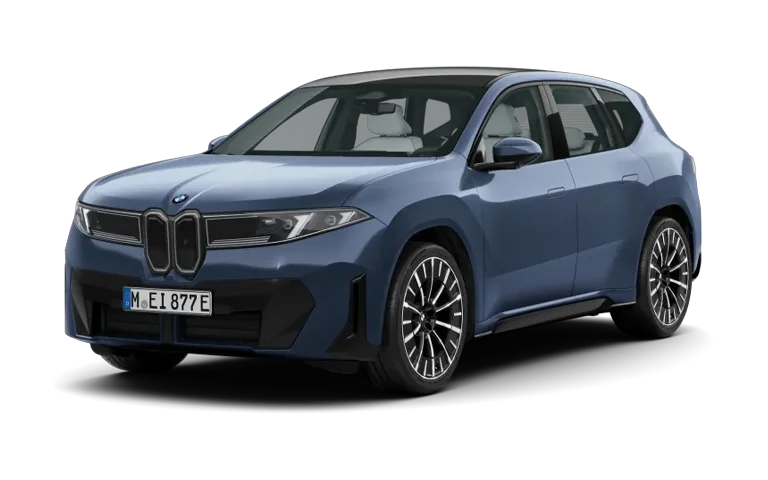
BMW iX3 50 xDrive
Electric Range2
805 km
DC min. charging time (10-80% state of charge)3
0:21 h
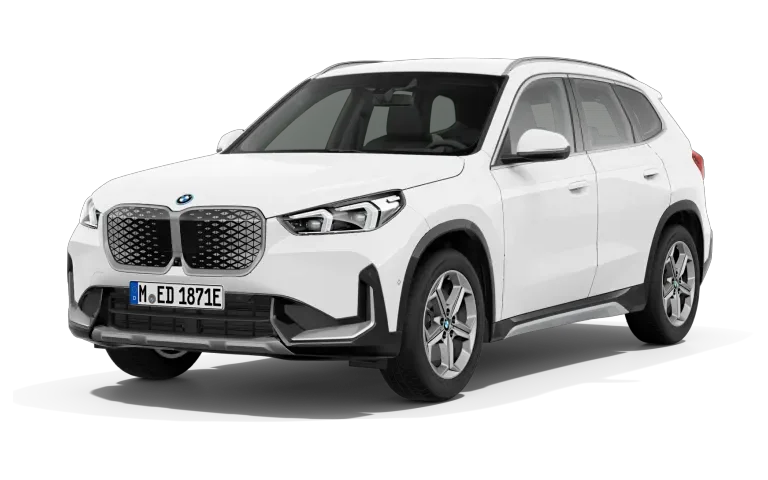
iX1 eDrive20
Electric Range2
Up to 464 km
DC min. charging time (10-80% state of charge)3
0:29 h
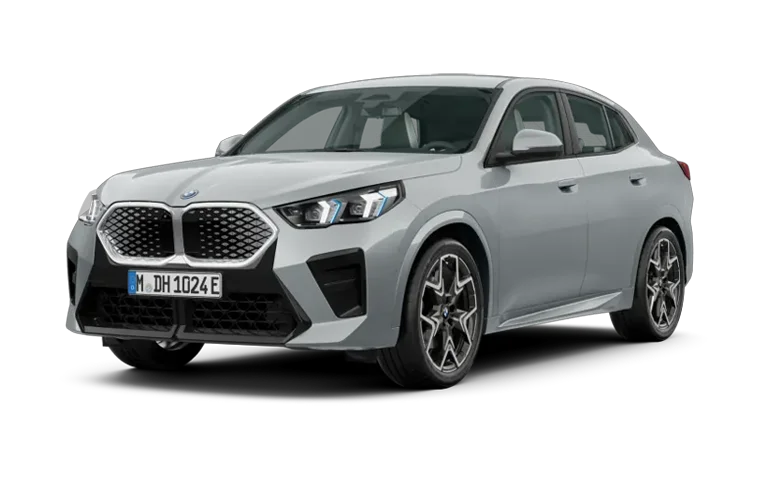
iX2 xDrive30
Electric Range2
Up to 395 km
DC min. charging time (10-80% state of charge)3
0:29 h
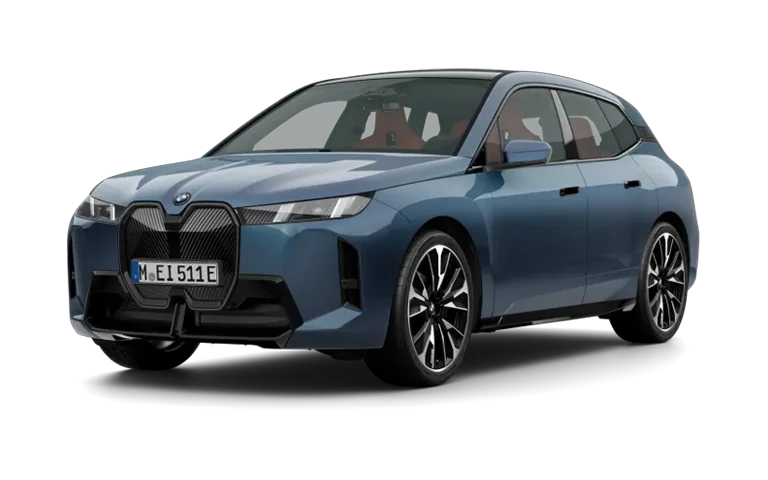
BMW iX xDrive45
Electric Range2
Up to 616 km
DC min. charging time (10-80% state of charge)3
0:34 h
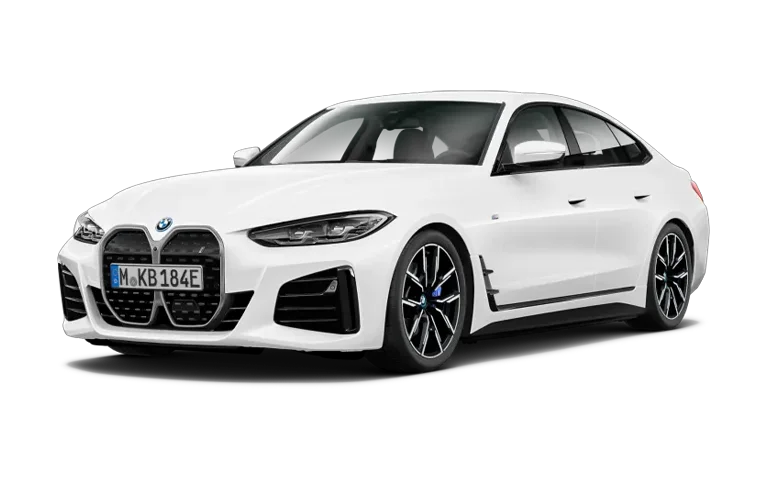
i4 eDrive40 Gran Coupé
Electric Range2
Up to 520 km
DC min. charging time (10-80% state of charge)3
0:30 h

i4 M50 Gran Coupé
Electric Range2
Up to 465 km
DC min. charging time (10-80% state of charge)3
0:30 h
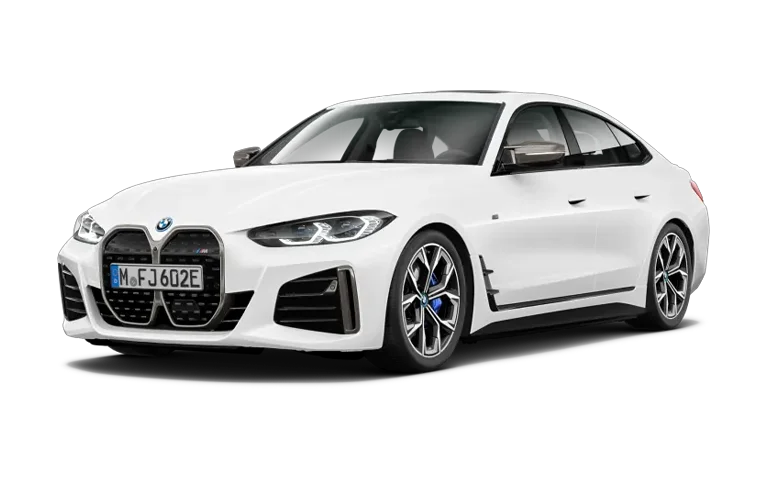
i5 M60 xDrive Touring
Electric Range2
Up to 503 km
DC min. charging time (10-80% state of charge)3
0:30 h
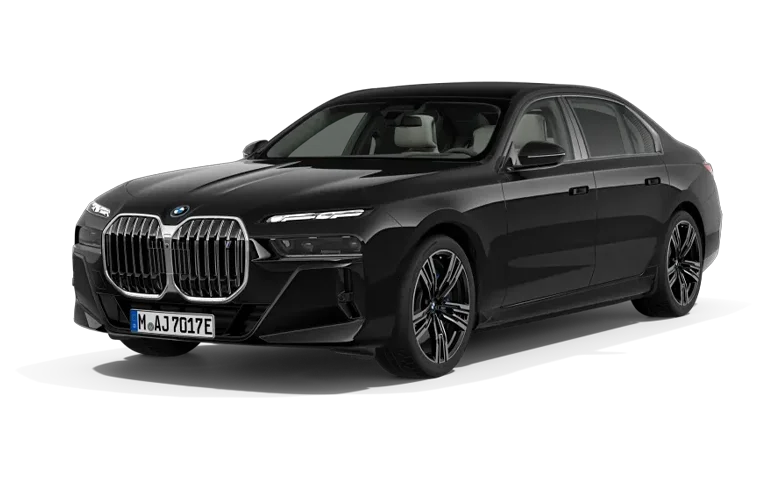
BMW i7 xDrive60 Sedan
Electric Range2
Up to 625 km
DC min. charging time (10-80% state of charge)3
0:34 h
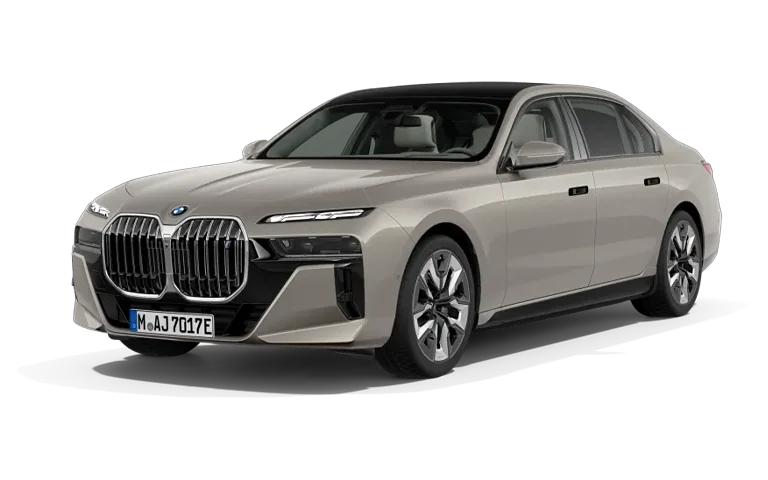
BMW i7 M70 xDrive Sedan
Electric Range2
Up to 576 km
DC min. charging time (10-80% state of charge)3
0:34 h
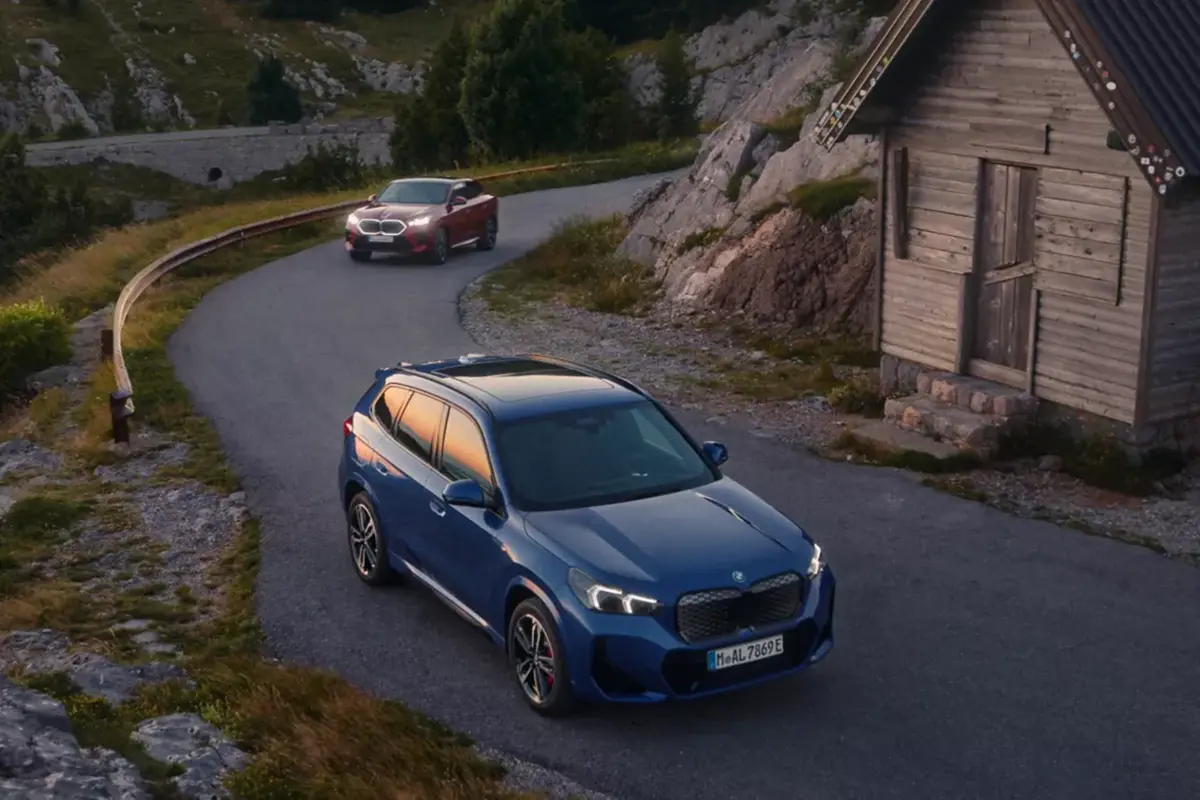
How do I increase the range of a BMW electric car?
Touch control or voice command is all you need to switch your BMW electric vehicle to Efficient My Mode. Vehicle functions are then set to energy-saving mode: for example, the power output of the drive is adjusted and air conditioning is intelligently reduced.
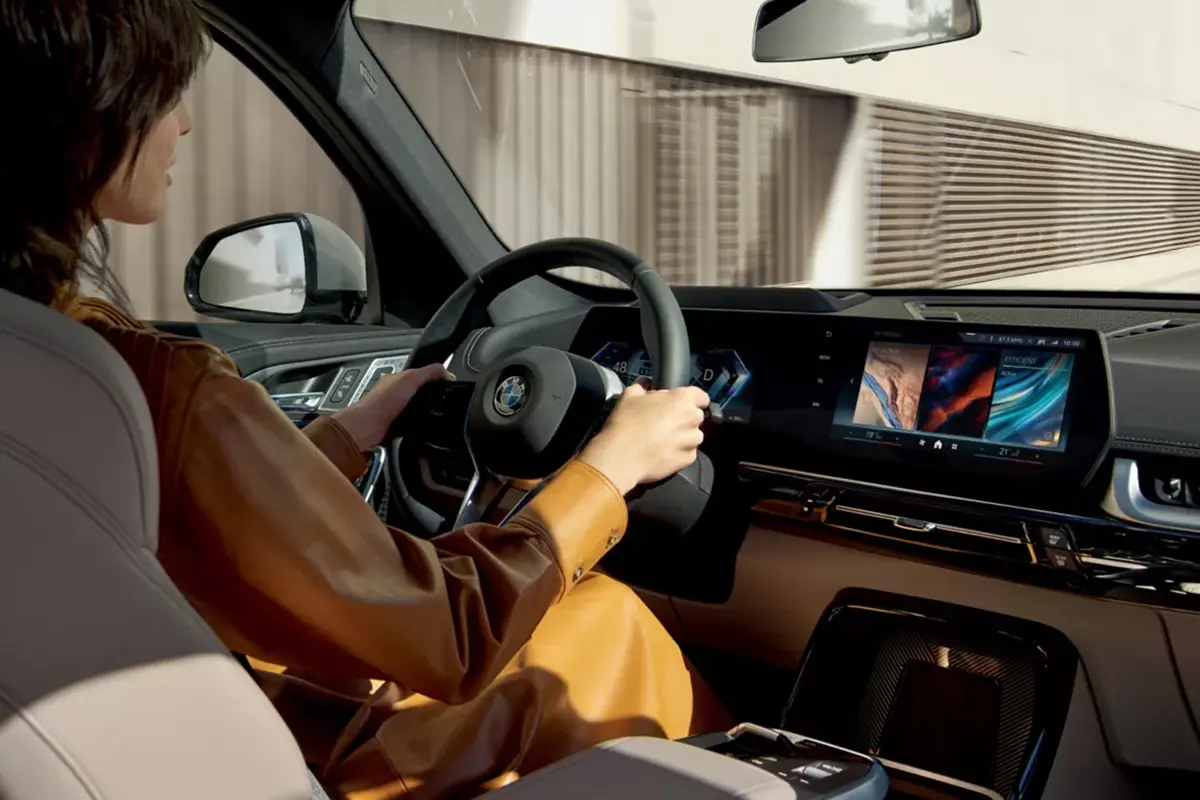
How to train yourself to have a more economical driving style.
With the BMW Operating System 8 or higher, the Efficiency Coach shows you how best to accelerate or coast to drive more efficiently. When you are driving efficiently, the power display will light up blue instead of grey. The range gained with an efficient driving style is shown on the information display.
Switching to maximum range while driving.
In Efficient Mode, the Max Range function provides greater range certainty. If, for example, an identified charging station cannot be used as planned, the range of your electric BMW can be increased by up to 25%. At the touch of a button and while driving.
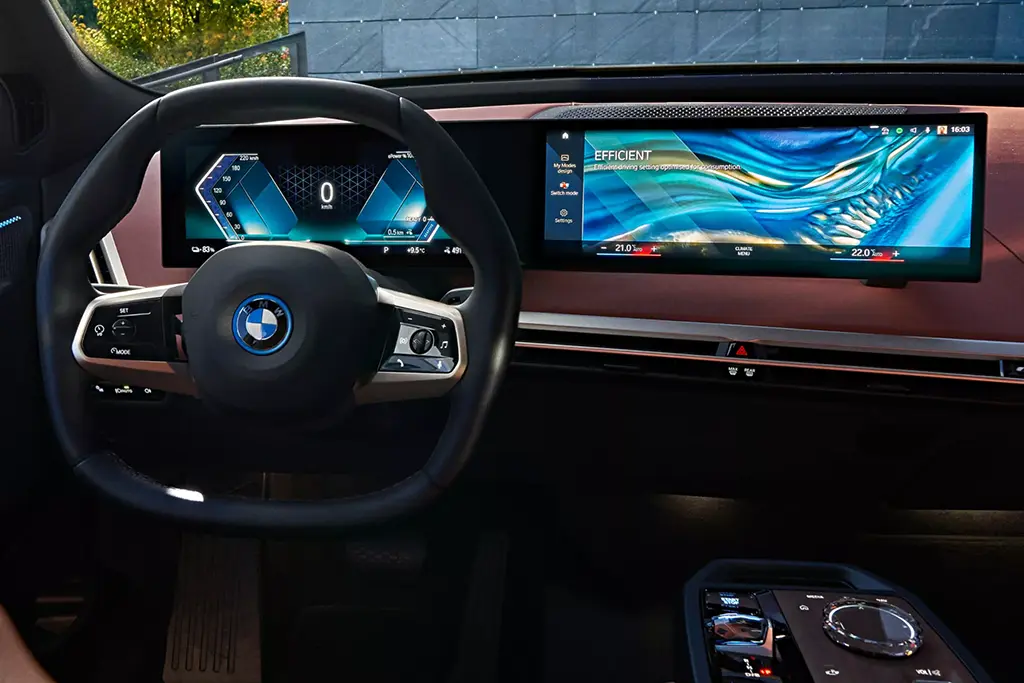
The drive power is reduced and the maximum speed is limited to 90 km/h. Comfort services, such as air conditioning or seat heating, are intelligently reduced. As much energy as possible is directed towards forward propulsion. The Max Range function is available for many fully electric BMW models. Please contact your BMW dealership for more detailed information.
All about electromobility.

The costs of electric cars.
What does it cost to charge an electric car? Save money with lower service costs and lower taxes. Are there subsidies or incentives for electric cars? Find out if an electric car makes sense for you.
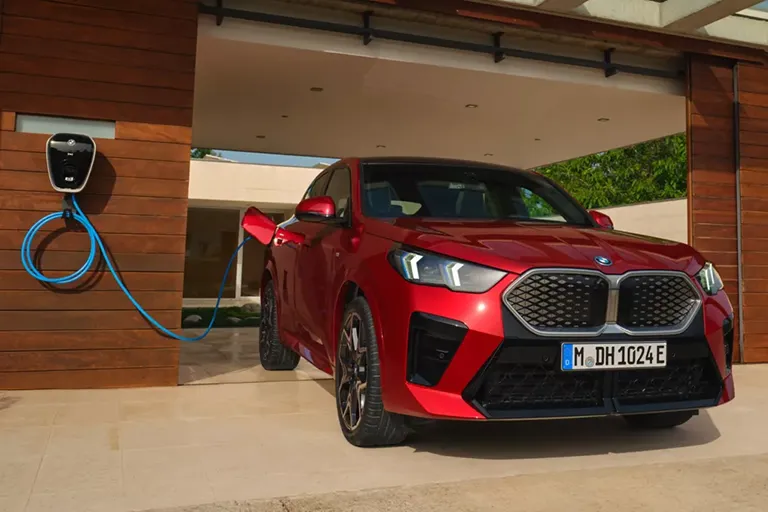
Charging at home.
Charge your electric car or plug-in hybrid vehicle overnight or between trips. Start your journey fully charged and adapt your charging habits for your electric BMW to suit your everyday routine.
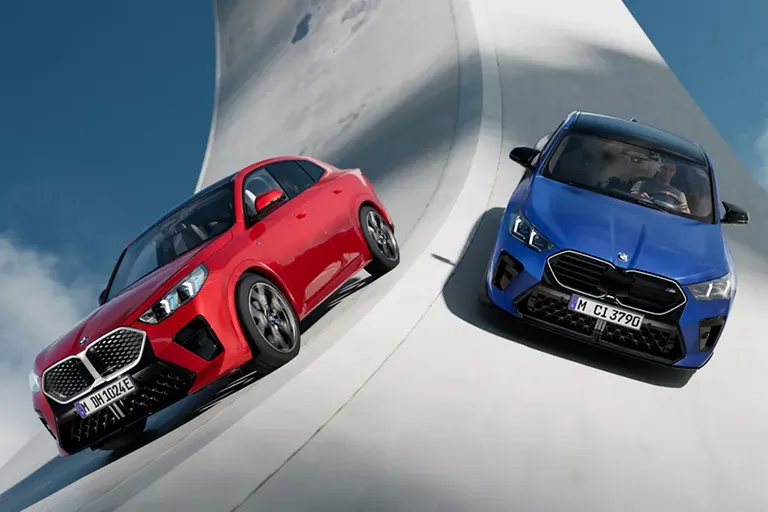
100% electric.
Drive dynamically, comfortably and, at the same time, locally emission-free. Prepare to be impressed by our fully electric cars with state-of-the-art technology and long ranges.
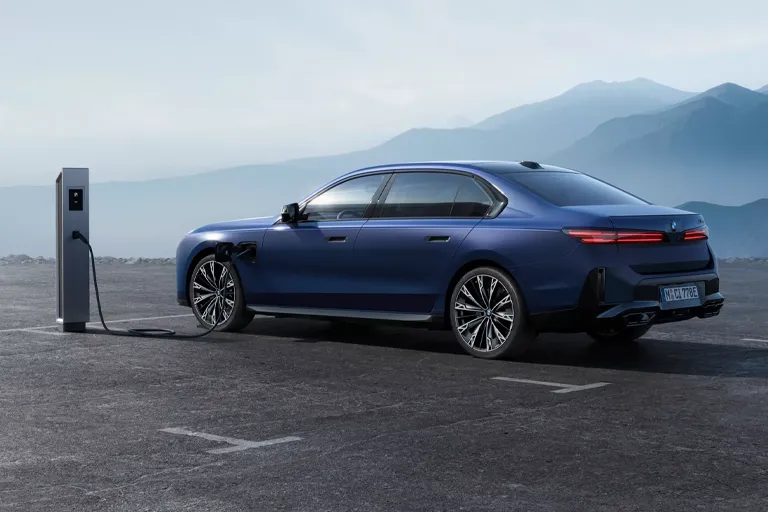
Plug-in hybrids: flexibly on the go.
BMW plug-in hybrid models combine the best of both worlds. You can drive locally emission-free with their electric drive over shorter distances or around town. And, as usual, their petrol engine will support you on longer journeys.
Frequently asked questions.
What can increase the range of an electric car?
You'll achieve the maximum range with your car by driving in an anticipatory manner and not wasting energy unnecessarily. This applies in particular to motorway driving. You're best driving at between 120 and 150 km/h on longer journeys. You'll need to charge earlier if you drive faster than this. The slower you drive, the further you'll go. The speed on motorways is therefore the major factor affecting your range.
When you take your foot off the "electric pedal", that is, the accelerator, or only apply moderate pressure to the brake, your car uses brake energy regeneration (recuperation). Driving in an anticipatory manner and avoiding heavy braking increases your range. However, besides the speed at which you drive on motorways, the outside temperature has the biggest impact on the range. In very cold or warm outside temperatures, it is advisable to pre-condition the vehicle interior while the vehicle is plugged in to a socket for charging. In doing so, you can obtain the maximum range, as cooling or heating uses electric energy. Simply enter your preferred departure time including climate control on the My BMW app or in the vehicle menu. That way, when you set off, you'll automatically enjoy your ideal interior temperature and the state of charge you entered.
Which electric car has the longest range?
Electric cars now have a very long range. Lithium-ion battery technology has improved massively in recent years. These batteries can now store more energy and be recharged more quickly. Modern electric cars are also designed to be energy efficient. This includes improvements to the aerodynamics, rolling resistance and energy recovery (recuperation) systems. This all helps to increase the range of the car. BMW offers a number of high-range models.
The BMW i4 eDrive40 has a maximum range of 613 km1, the BMW i7 xDrive60 achieves an impressive 624 km1. The BMW iX xDrive 60 reaches 701 km1, and the new BMW iX xDrive45 as much as 616 km1. Increasing availability of charging stations now makes it easier and more convenient to drive electric cars over longer distances. With more and more charging stations along routes, drivers can now be confident that they can charge their batteries when they need to.
1 Electric range, WLTP in km.
What does WLTP range mean?
The abbreviation WLTP means "Worldwide Harmonised Light Vehicles Test Procedure". This is a test cycle regulated by law, which consists of four sub-cycles. Essentially, it consists of a combination of urban, suburban, rural and motorway driving. In practice, however, apart from the average speed, the range depends on other factors, which often deviate from the cycle assumptions: personal driving style, location-specific traffic situation, outside temperature, uphill/downhill gradients and heating/air conditioning, among others. When driving purely on the motorway, the stated WLTP range is not usually achieved due to the lower energy consumption used in the WLTP calculation for urban and rural sub-cycles. In practice, this percentage drop below the WLTP range cannot be exactly predicted due to individual, greatly varying speeds and other aforementioned factors.
What affects the range of an electric car in winter?
The cold can reduce the range of an electric vehicle battery. The usable capacity of the battery can be limited by low temperatures, and the heating system needs more energy.
How can I keep the battery range high in cold weather despite all this? Many electric vehicles offer the option of pre-heating the vehicle before a journey, preferably when the vehicle is being charged, to warm up the interior and the battery. This reduces the impact of cold on the range. It also helps if the car is parked in a garage in cold temperatures. Specific activation of window and seat heating or pre-heating before the start of a journey also drains a battery less than full air conditioning. Driving in an economical mode, such as Efficient Mode, will also achieve a greater range. Energy consumption can be reduced by limiting comfort functions, such as air conditioning.
More information.

Test drive the BMW model of your choice.
Would you like to experience for yourself how your ideal electric model drives and feels? Simply arrange an online appointment for a test drive when it suits you. Your local BMW partner will contact you with all the information you need.
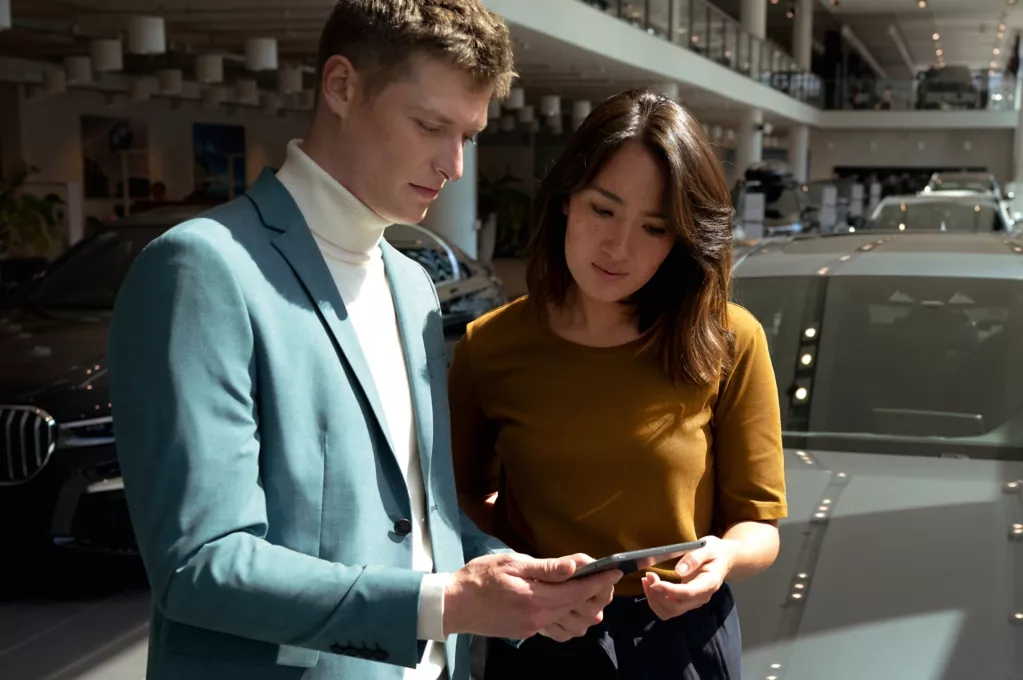
Would you like a personal consultation?
Please contact your our dealership with any questions or for more information or a quotation. Our professional BMW service personnel will be happy to advise you by phone or in person.

BMW Customer Support.
BMW Customer Support is on hand to help you with all BMW related issues – so that you get answers to all your questions: whether you're an existing BMW driver or are planning to purchase a new BMW.

BMW Online Genius can help.
Still got questions? The BMW Online Genius has all the answers. Find all the answers to the most frequently asked questions. Simply type in your questions or browse by category.
Enquire Now
1 Fuel consumption, CO2 emissions data, electrical consumption and range is based upon Combined Driving Test Cycle in accordance with ADR 81/02 on purpose built test vehicles. Actual figures will depend on many factors including traffic conditions, driving habits, prevailing conditions and your vehicle’s equipment, condition and use. These figures should not be expected to be achieved in real world driving conditions and should only be used for comparing one vehicle with another. Please contact your preferred authorised BMW dealer or BMW Group Australia for information on vehicles that are available for sale, and the various specifications and options of vehicles that are available.
The stated values are based on the mandatory WLTP measurement procedure. The real life values depend on various factors, e.g. cargo weight, driving style, route, weather conditions, auxiliary electrical consumption (including air conditioning), tires, battery state of health.
2 The charging performance depends on vehicle equipment, the state of charge and health of the battery, battery temperature, individual driving profile, use of auxiliary users, ambient temperature, and the charging power provided at the charging station.
3 The added range after 10 minutes of high-power charging was determined according to ISO12906 in the WLTP cycle and requires that the charging infrastructure enables the maximum DC charging power. The added range and charging performance depend on vehicle equipment, battery state of charge and health, ambient and battery temperature, driving profile, auxiliary users, vehicle-specific charging settings, and the charging power provided by the charging station.